
Convince your mirror
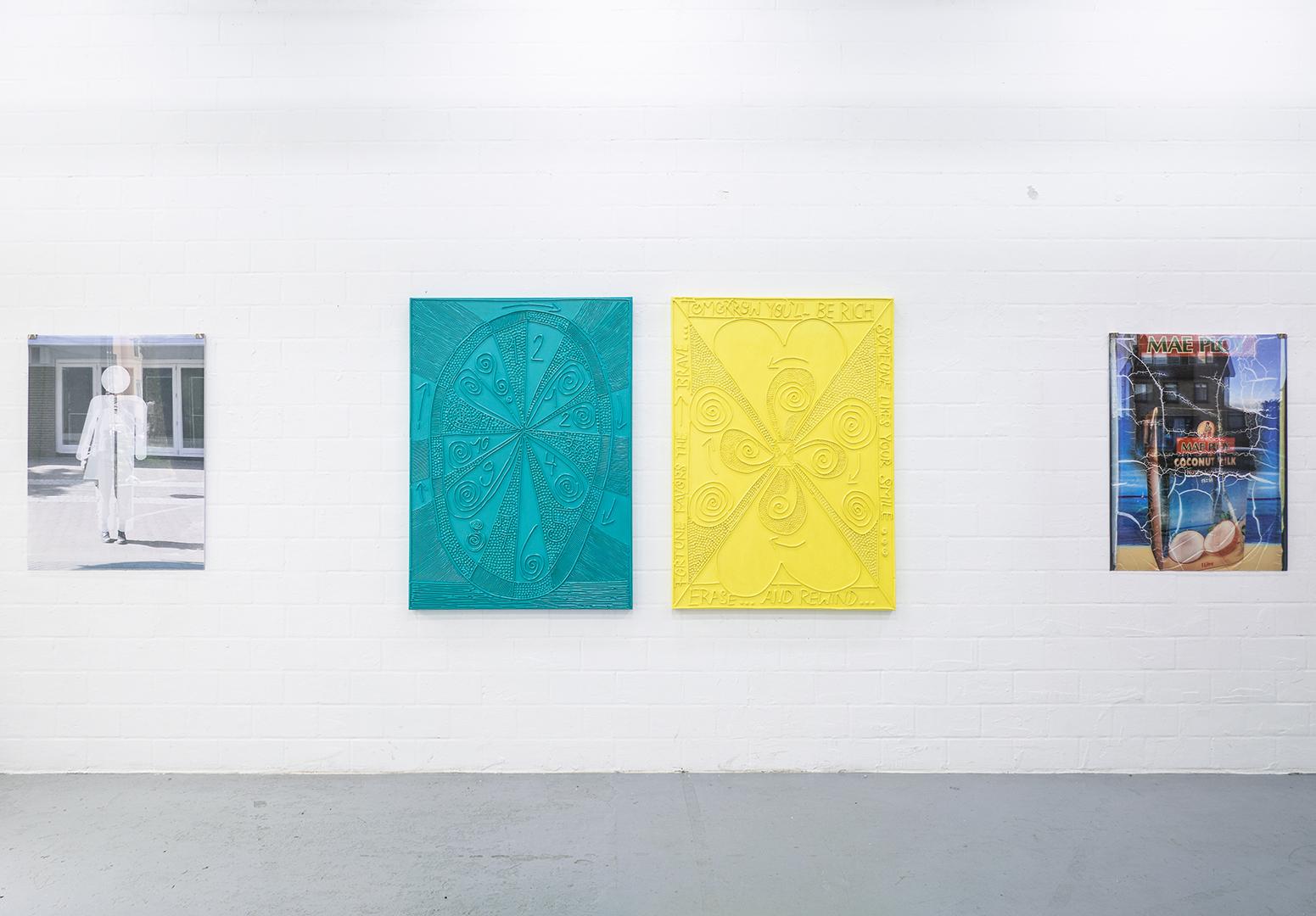
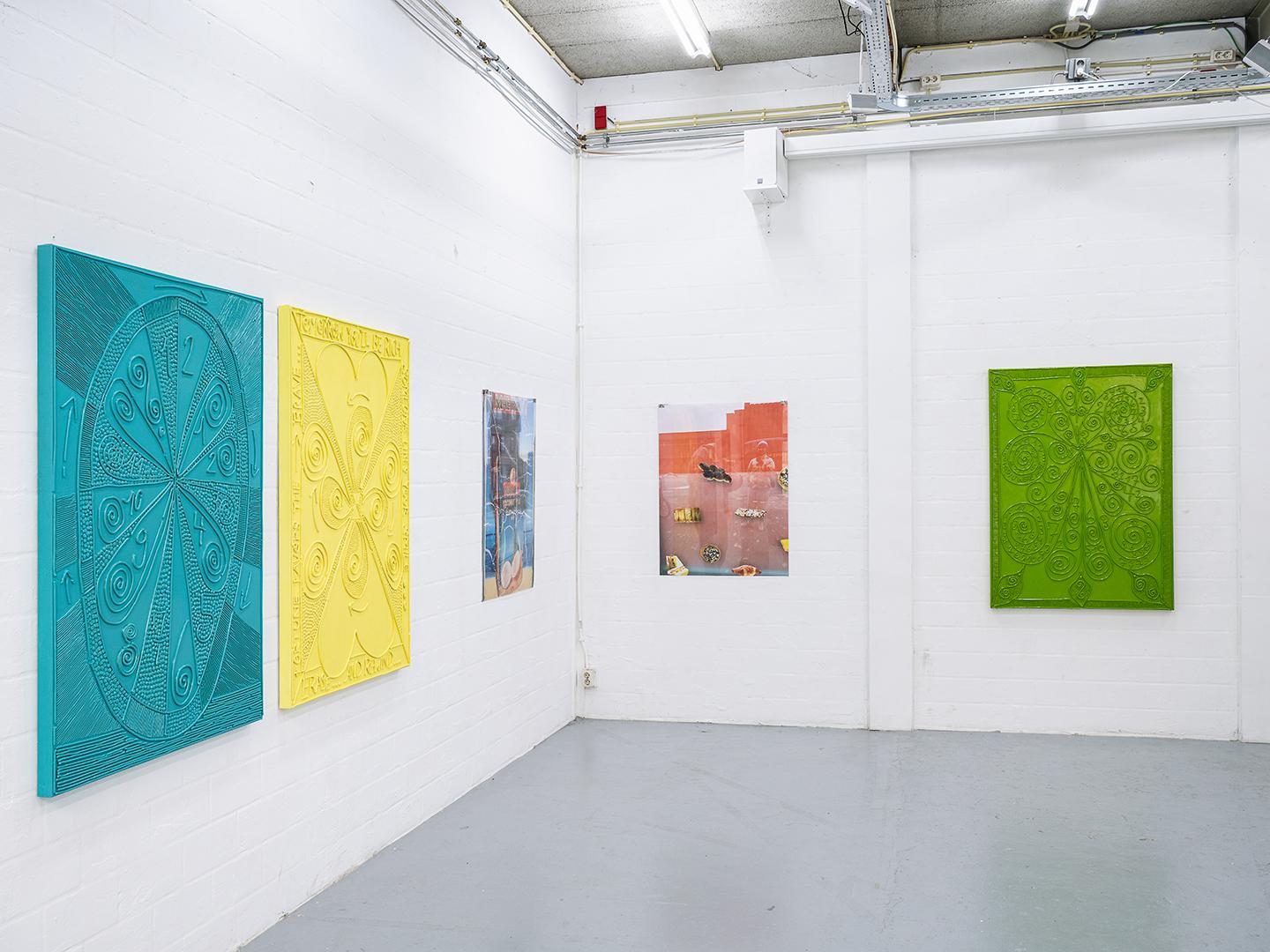
The works of Lea van Vlodrop and Isa Bongers move in opposite directions, yet arrive within a shared space. They reveal a similar visual dynamic in reverse: some images move from noise toward clarity, while others dissolve from clarity back into noise. Together, the works destabilise the boundary between what is seen and what is projected.
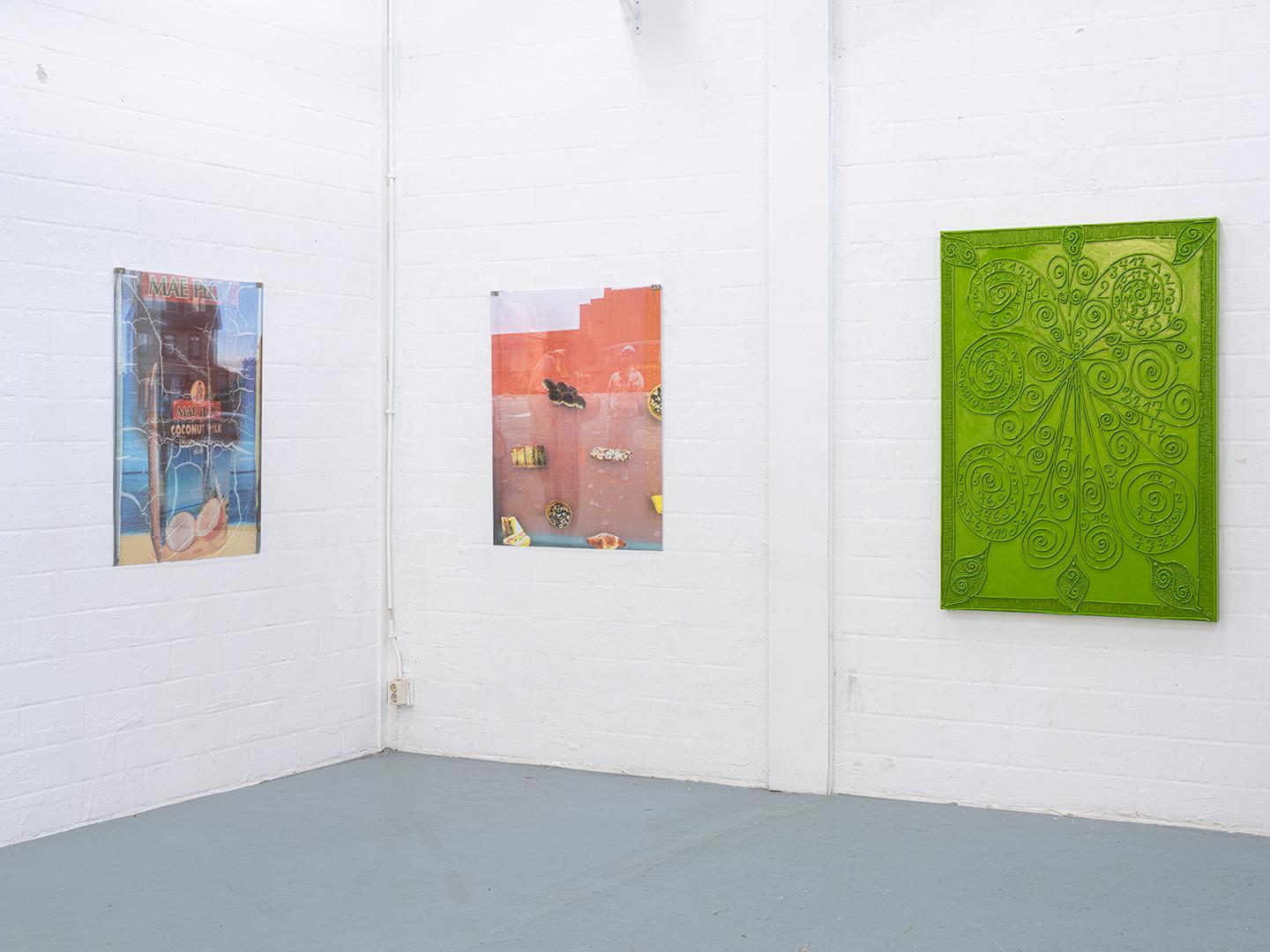
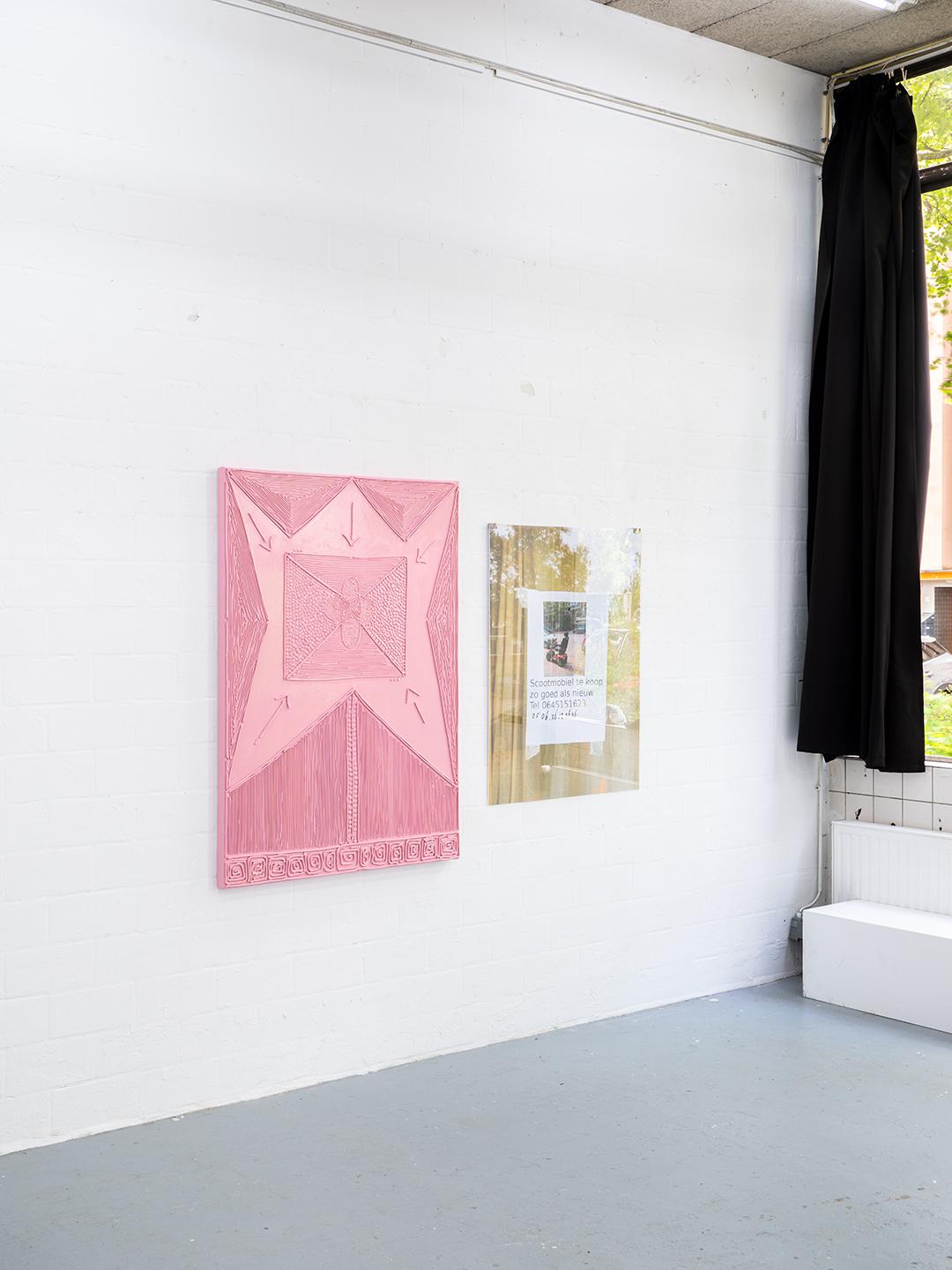
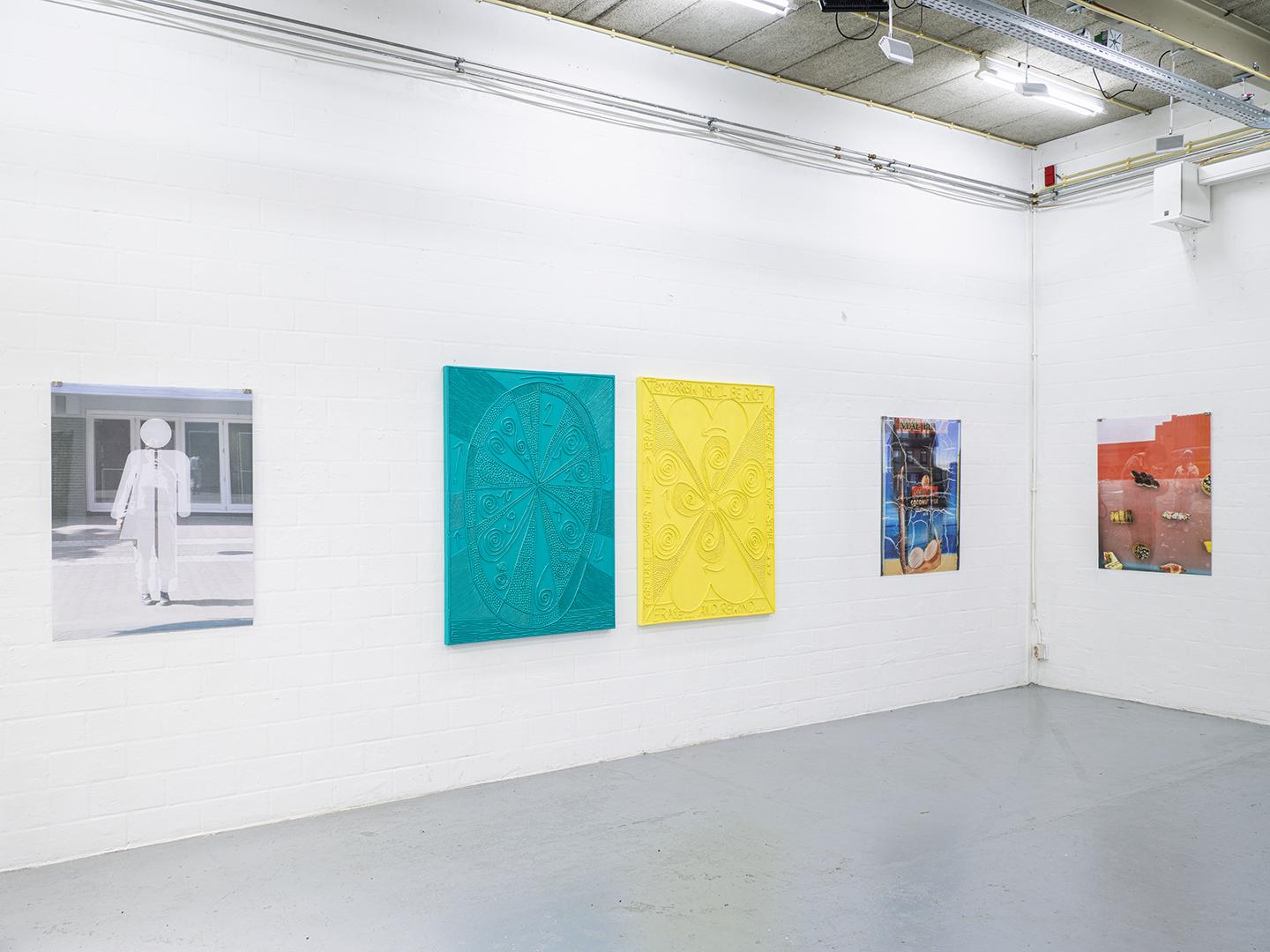
In the works presented here, Isa Bongers brings together moments in which the tension between reality and representation briefly surfaces. Her collages appear almost as glimpses: glass reflecting faces layered over faces; an image of a street suspended within the window of that same street; coconuts on a beach suddenly displaced into a Dutch residential neighbourhood. The works reveal how images continuously fold into one another, forming a vibrant visual excess in which the viewer may also recognise themselves. Enlarged and saturated with colour, these fragments no longer hide in plain sight, but instead demand attention.
Isa works with images already circulating through the city: advertisements, visual fragments, and symbols embedded within public space. Her practice attends to the ways these images arrive preloaded with meaning — carrying cultural aspirations, capitalist desires, and behavioural cues. They are images designed to communicate efficiently, direct perception, and produce recognition. In this sense, they move from noise toward clarity, though never fully arriving there. In their attempt to stabilise meaning, they enter an ongoing negotiation between imagined representation and lived reality.
The symbols within Lea’s paintings remain open, unstable, and emotionally permeable. The viewer is not instructed what to see, but instead enters the image through personal associations, desires, memories, and projections. Meaning does not arrive fully formed, but emerges through encounter. The paintings become surfaces onto which interpretation accumulates, where symbolic forms shift between intimacy and ambiguity rather than settling into a fixed reading.
A recurring image appears throughout several of Lea van Vlodrop’s works: the merging of a clock and flowers. What first emerged intuitively later revealed itself through the movement of the clock’s pointers, echoing the gesture of the game effeuiller la marguerite — “He loves me, he loves me not.” The paintings merge two conditions: the progression of time and the possibility of chance. Like the game itself, the motif reflects a desire to search for signs and synchronicities within uncertainty — to project meaning onto what cannot be fully resolved. Suspended somewhere between faith and fear, the image holds both anticipation and doubt, transforming the symbolic language of the works into something intimate and unresolved.
Convincing a Mirror is not a passive or merely reflective act; it implies activity. The mirror here is not a neutral surface, but a responsive field through which both Isa’s circulating images and Lea’s material paintings are continuously negotiated. To convince the mirror is to acknowledge that what we see — and what we become through seeing — emerges through an ongoing exchange between external imagery and embodied perception.